Table Of Content

After deployment, it’s vital to conduct post-implementation reviews to assess the design’s overall success and gather lessons for future projects. Regular maintenance checks are also necessary to ensure sustained performance and longevity. Students work through an online tutorial on MIT's App Inventor to learn how to create Android applications.
Hands-on Activity
Notice that there are two different types of potential project ideas that you have come up with on your bug list. First, there are the unsolved problems that don't currently have a solution. Second, there are poorly solved problems that have solutions, but the solutions are not entirely successful.
Brainstorm Possible Solutions
Students follow the steps of the engineering design process as they design and construct balloons for aerial surveillance. Applying their newfound knowledge, the young engineers build and test balloons that fly carrying small flip cameras that capture aerial images of their school. Students are asked to design a hockey stick for a school’s new sled hockey team. Using the engineering design process, students act as material engineers to create hockey sticks that have different interior structures using multiple materials that can withstand flexure testing.
Engineering Design – Example Projects
Student teams are challenged to design models of Egyptian funerary barges for the purpose of transporting mummies through the underworld to the afterlife. Students design and build prototypes using materials and tools like the ancient Egyptians had at their disposal. Students gain experience with the software/system design process, closely related to the engineering design process, to solve a problem. The lesson culminates in a hands-on experience with the design process as students simulate the remote control of a rover. Student teams are challenged to design assistive devices that modify crutches to help people carry things such as books and school supplies.
7 game-changing trends in structural engineering - Building Design + Construction
7 game-changing trends in structural engineering.
Posted: Fri, 15 Oct 2021 07:00:00 GMT [source]
Most projects involve modifying or enhancing an existing product or process; these projects are described as incremental design. Test out your ideas on paper or a whiteboard, particularly with others. While schools usually assign individual work, engineering usually involves teams and these steps work well with groups since you can bounce ideas off of your teammates. Take some time to see which of your initial concepts are a practical fit to solve your problem and answer your question.
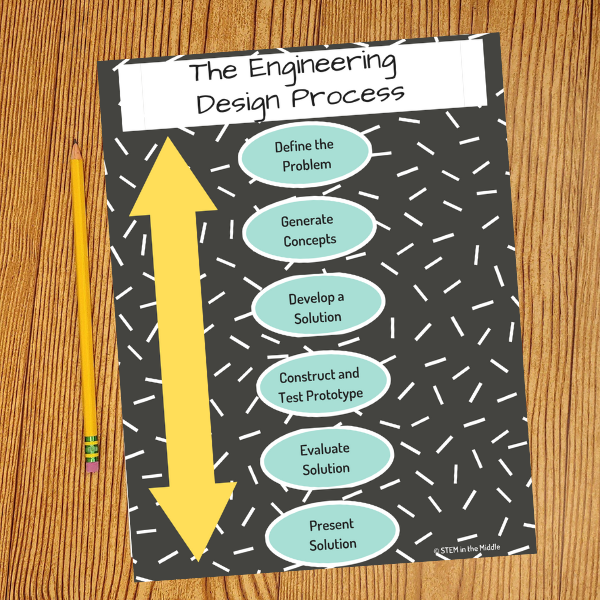
It aims to maximize the performance of the product by finding the best configuration of design inputs (dimensions, orientation, engineering fits, etc.). Intensive brainstorming generally leads to a pool of potential design concepts that the team can then move ahead with. Once you've created a usable prototype, it's time to conduct testing. Run a series of tests to determine how well the product works, not only in normal operating conditions but also in different conditions that introduce extra stress. It's also important to remember that the process is iterative, and steps may be repeated as needed to achieve a specific objective. These features combine to create a method that produces innovative thinking and multiple solutions to complex problems.
Build a Prototype
Biomedical engineers design, create, and test health technology that measure all sorts of physical functions in the body, including heartbeat. Students play the role of biomedical engineers in this activity and create a device that helps visualize heartbeats. Students design, build and evaluate a spring-powered mouse trap racer.
For older students who come to class with a greater body of knowledge, the context for problem-solving can be broader and more individualized. John Larmer, in his Edutopia article Project-Based Learning vs. Problem-Based Learning vs. X-BL, classifies problem-based learning as a subset of project-based learning. He also shares with readers a concise comparison chart of the two types of learning. Problem-solving is the focus of EDP and, therefore, problem-based learning can be confused with project-based learning. Some projects that involve controlled or hazardous substances need SRC (Scientific Review Committee) approval from your science fair BEFORE you start making things. Now is the time to start thinking about getting approval if necessary for your engineering project.
Science Olympiad events combined with familiar and engaging stories are two readily available resources to build rich content for EDP lessons. Once familiar with the engineering design process cycle, teachers can integrate resources available to them and connect standards to teach STEM through EDP and PBL. Prior test data should inform the GRASPS and be a research resource in substep A.2 – Investigate and Research the Problem. As such, students can leverage these results to reference the success of their prototypes.
By working with multiple ideas and identifying potential design flaws early in the process, you can greatly reduce the risk of a product going all the way to completion with flaws. Testing throughout the process addresses errors in real time and keeps rework to a minimum. 95% of the nearly 30,000 new products introduced each year fail. The most common reason for this failure is a lack of need for the product. Successful products aren't just innovative ideas, they're solutions to problems shared by groups of people. Part of defining the problem you’re going to solve is identifying the trade-offs present in the problem.
The engineering design process is a specific set of steps engineers use to organize their ideas and refine potential solutions to engineering challenges. Embarking an engineering design project is much more than simply describing the project; engineers must gain an understanding of all the issues surrounding a particular design challenge. These issues might include the need for the project, relevant social and economic conditions of the target population, and project constraints and requirements. Working through these non-technical contextual factors helps engineers generate useful, appropriate and successful design solutions.
This involves selecting the most promising ideas and assessing their feasibility. The evaluation should take into account technical feasibility, economic viability, and market potential. In some cases, a feasibility study is carried out after which schedules, resource plans and estimates for the next phase are developed. The feasibility study is an evaluation and analysis of the potential of a proposed project to support the process of decision making. It outlines and analyses alternatives or methods of achieving the desired outcome. The feasibility study helps to narrow the scope of the project to identify the best scenario.A feasibility report is generated following which Post Feasibility Review is performed.
At this point, the deliberate and thorough nature of the engineering design process, with teacher feedback, should have yielded many well-reasoned aluminum watercraft prototypes. Regardless, some designs may fail earlier than expected due to testing error and/or some unforeseen design flaw. Here, students build their aluminum watercraft prototypes by hand, based on their best idea to meet the goal in the GRASPS. Their design usually shares characteristics of what they sketched in substep B.3 – Represent the Best Idea. How the prototype is built may match up with the building instructions in C.1 – Plan the Build as well, but not always.




No comments:
Post a Comment